Technical JournalSheet 03 / Shirt StylesRev. A

Men's Formal Shirt Styles drawn, measured & annotated in Juhu, Mumbai

A pattern-cutter's sketchbook for the man who wants to know why a shirt looks right. Collars, cuffs, fits and sleeves — each one drawn to the line, set beside a photographed plate, and explained in plain terms: what it is, whom it flatters, and where it belongs.

Subject
Men's formal shirts — collars, cuffs, fits, sleeves
Figures
09 drawings · 20 plates
Scale
Not to scale — proportions indicative
Drawn at
Options Mall, Juhu, Vile Parle West
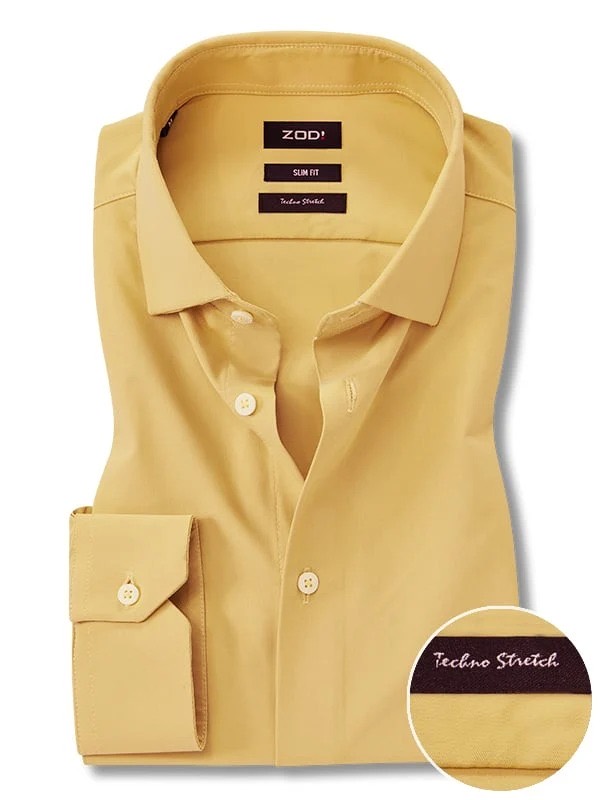
Folded mustard-yellow men's formal shirt with a wide spread collar and single-button cuff, studio shot with a woven label shown in a circular close-up
Pl. 01 — Spread collar, mustard. Studio fold.See Fig. 04
§ 00 — Contents

Index of styles

Eleven entries, read in the order a shirtmaker thinks: first the character of the shirt, then the cut of the body, then the details that frame the face and the wrist. Every entry carries a drawing, a plate and a specification.

  1. 01Classic formal shirtsFig. 01 · Pl. 02
  2. 02Contemporary business shirtsFig. 02 · Pl. 03, 13
  3. 03Slim-fit shirtsFig. 03a · Pl. 04
  4. 04Regular-fit shirtsFig. 03b · Pl. 05, 14
  5. 05Tailored silhouettesFig. 03c · Pl. 06
  6. 06Spread collarsFig. 04 · Pl. 01
  7. 07Point collarsFig. 05 · Pl. 07
  8. 08Button-down collarsFig. 06 · Pl. 08, 15
  9. 09French cuffsFig. 07 · Pl. 09
  10. 10Barrel cuffsFig. 08 · Pl. 10, 16–17
  11. 11Full sleeve & half sleeveFig. 09 · Pl. 11–12, 18–20
§ 01 — Character

Classic &contemporary

Every formal shirt is assembled from the same parts — collar, yoke, placket, cuffs, hem. What separates the classic from the contemporary is intention: how loudly those parts are allowed to speak. Read the two side by side before deciding which belongs in your working week.

Two archetypes. Same construction, different intentions.

Fig. 01 — Classic formal shirt, front technical flat Line drawing of a full-sleeve formal shirt with a semi-spread collar, a front placket with seven buttons, a chest pocket and two-button barrel cuffs, annotated with chest and back-length dimensions. CHEST BACK LENGTH SEMI-SPREAD COLLAR CHEST POCKET BARREL CUFF · 2 BTN
Fig. 01 — Classic formal shirt, front flat1 : n.t.s.
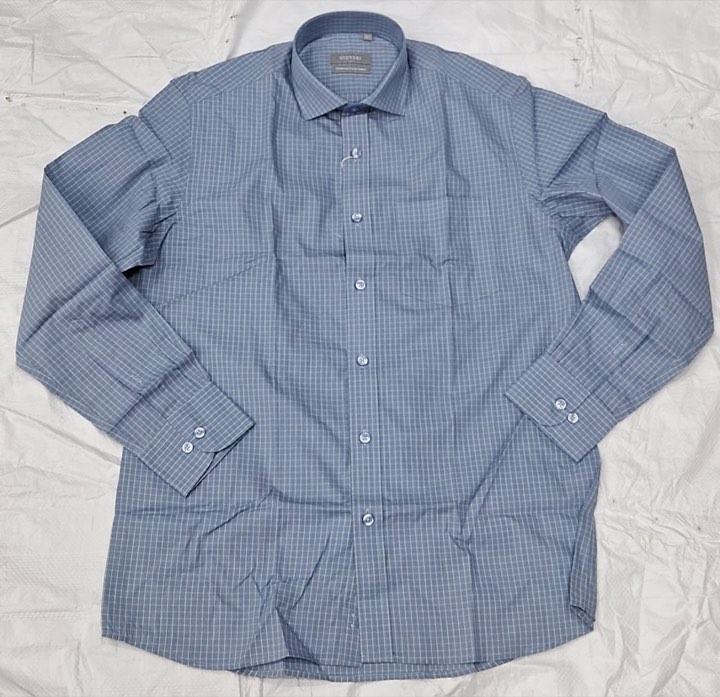
Men's blue formal shirt in a fine white micro check, laid flat, with a semi-spread collar, chest pocket and two-button barrel cuffs
Pl. 02 — Blue micro check, semi-spread collarFlat-lay
Entry 01

Classic formal shirts

The classic formal shirt is the drawing every other style departs from: a turned-down collar of moderate spread, a full-length front placket, a single chest pocket or none, barrel cuffs and a curved shirt-tail hem that stays tucked when you sit. Its colours are disciplined — white, pale blue, quiet stripes and checks so fine they read as texture from across a table.

It is the most useful shirt a man owns, which is exactly why it rewards care. Look for a collar that sits flat on both sides, a placket that runs dead straight, and checks or stripes that match across the pocket and the front.
Collar
Point or semi-spread; medium points
Cuff
Barrel, one or two buttons
Palette
White, sky and mid-blue; fine stripe, micro check
Formality
4 / 5
Wear with
Navy or charcoal suits; grey trousers; any tie

Application — The daily office shirt, the interview, the first client meeting. Build a rotation of white and blue formal shirts, then add a micro check like Pl. 02 for days when plain feels too plain.

Entry 02

Contemporary business shirts

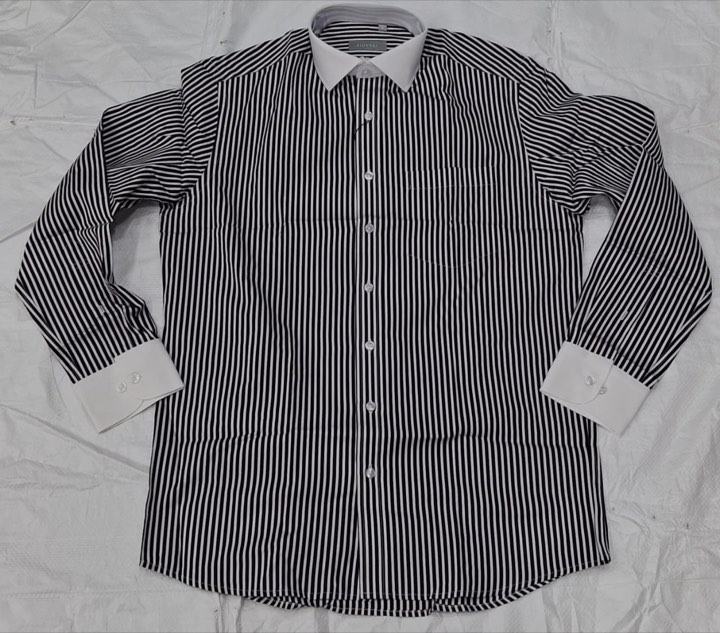
Where the classic shirt recedes, the contemporary business shirt is allowed to speak. Bolder stripes, deeper colours, cutaway collars, concealed plackets — and the contrast collar and cuffs seen in Pl. 03, a white collar set on a striped body, often called a banker's or Winchester shirt.

The trick is to let one element lead. A contrast collar wants a plain dark suit and a solid tie; a bold stripe wants everything else quiet. When the shirt is the statement, the rest of the outfit becomes its frame.

Signals
Contrast collar & cuffs, bold stripe, cutaway, colour
Collar
Spread or cutaway; crisp, stand-up
Formality
3 / 5
Wear with
Solid navy, charcoal or black; plain ties
Avoid
Patterned suits or busy ties alongside

Application — Presentations, launches, evening events straight from the office. See the wider contemporary chapter and the striped formal shirts in our collections.

Contemporary business shirt in bold black and white vertical stripes with a white contrast collar and white contrast cuffs, laid flat
Pl. 03 — Bold stripe, white contrast collar & cuffsFlat-lay
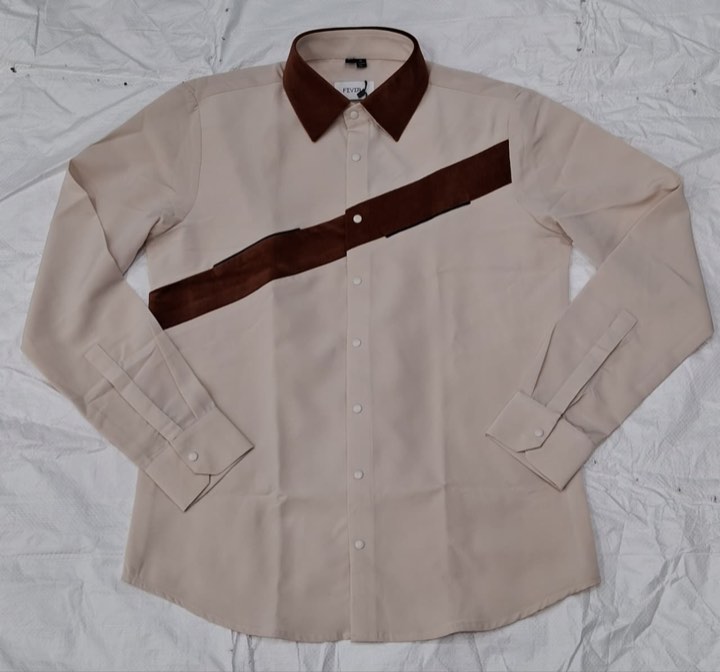
Cream men's shirt with a contrasting brown collar and a diagonal brown panel across the chest, laid flat with full sleeves
Pl. 13 — Cream, brown contrast collar & panelIllustrative
Fig. 02 — Contrast collar and cuff, detail Close detail of a striped shirt body with a plain white contrast collar and a plain white contrast cuff, the contrast pieces outlined in burgundy. WHITE CONTRAST COLLAR CONTRAST CUFF STRIPED SLEEVE
Fig. 02 — Contrast detail
§ 02 — Plate II · The silhouette

Three ways tocut a torso

The same man, drawn three times. The dashed figure is the body; the solid line is the shirt. Read the distance between them — the ease — and you understand fit better than any size label can tell you. For a longer conversation, read Understanding Shirt Fits in the Style Journal.

Fig. 03 — Slim, regular and tailored shirt silhouettes compared Three front torso outlines drawn over the same dashed body. The slim fit sits close at chest and waist, with the regular-fit outline ghosted behind it to show the volume removed; the regular fit falls straight from chest to hem; the tailored fit is shaped gently at the waist. Arrows mark chest and waist widths. CHEST · CLOSE WAIST · TAPERED CHEST · EASY WAIST · STRAIGHT CHEST · MEASURED WAIST · SHAPED FIG. 03a — SLIM FIG. 03b — REGULAR FIG. 03c — TAILORED ghost: regular dart
Fig. 03 — Silhouettes compared over one bodyDashed: body · Solid: shirt
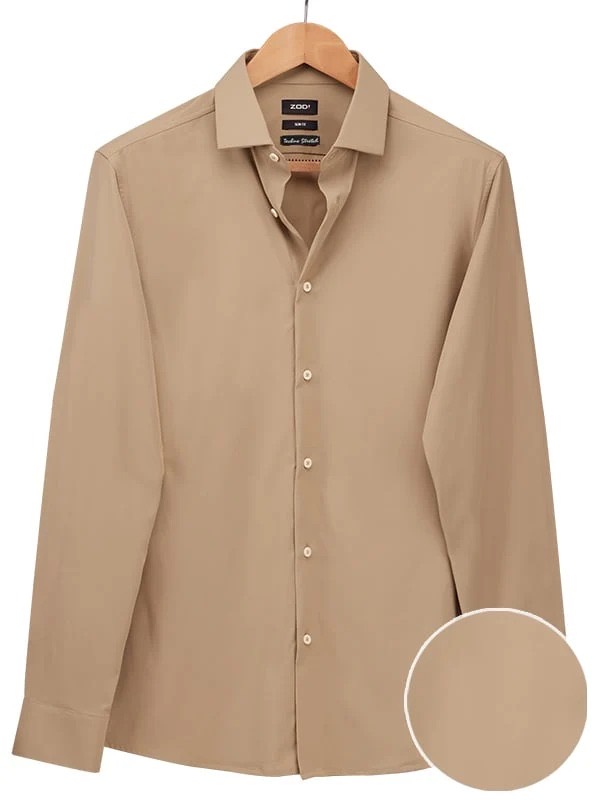
Camel slim-fit formal shirt for men on a wooden hanger, with a cutaway collar and a circular close-up of the smooth fabric
Pl. 04 — Camel, cutaway collarStudio, on hanger
03a · Slim

Slim-fit shirts

A slim fit follows the torso closely: higher armholes, a narrower sleeve, and a body that tapers from chest to waist so there is no fabric to billow over the belt. Notice in Pl. 04 how cleanly the sides drop from the armhole — that is the slim cut doing its work even on a hanger.

It flatters a lean or athletic frame and pairs naturally with narrow trousers and a shorter, sharper jacket. The test is simple: button it, sit down, reach forward. If the buttons strain or the placket ripples into horizontal folds, go up a size or across to a tailored cut.

Chest
Close; minimal ease
Waist
Clearly tapered
Armhole
High, for freedom of movement
Build
Lean, slender, athletic
Pair with
Slim trousers; close-cut jackets
03b · Regular

Regular-fit shirts

The regular fit falls straight from chest to hem, with a fuller armhole and a sleeve that leaves room to move. It is the traditional cut of business wear for good reason: comfortable through a long day, forgiving after lunch, and calm under a jacket.

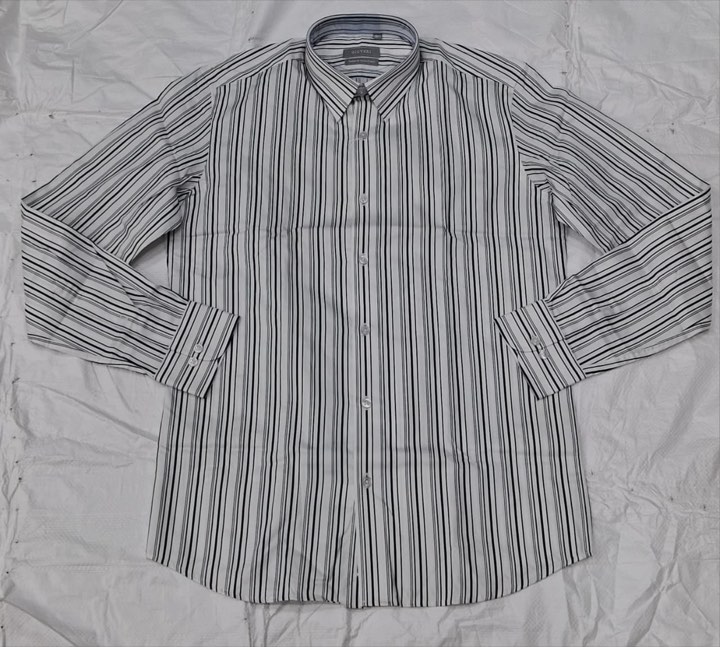
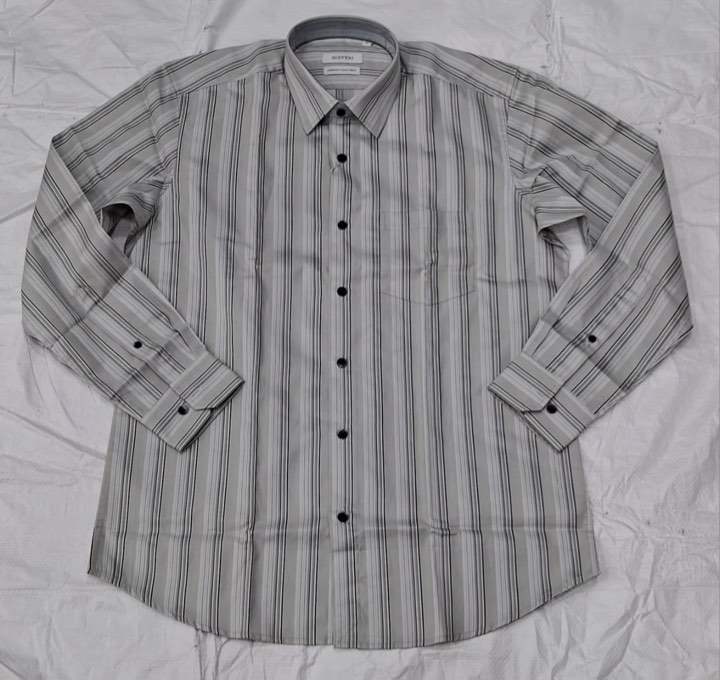
For broader builds and men who prefer ease, regular-fit formal shirts are not a compromise but the correct choice. Fit the shoulder first — the seam should meet the edge of your shoulder bone — and let the body take care of itself. Pl. 05, a crisp grey-and-black stripe, shows how a straight body lets a stripe run unbroken.

Regular-fit white formal shirt with grey and black vertical stripes and a point collar, laid flat with full sleeves
Pl. 05 — White with grey & black stripeFlat-lay
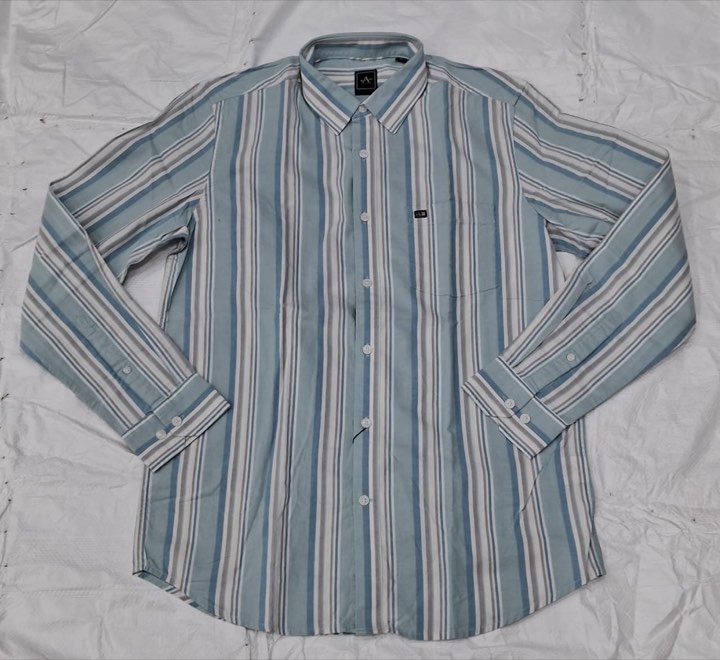
Long-sleeve men's shirt in sky blue, sage, white and pink vertical stripes with a small collar, laid flat
Pl. 14 — Sky, sage & pink stripeFlat-lay
Chest
Generous ease
Waist
Straight; no taper
Build
Broad, fuller, or comfort-first
Check
Shoulder seam on the shoulder bone
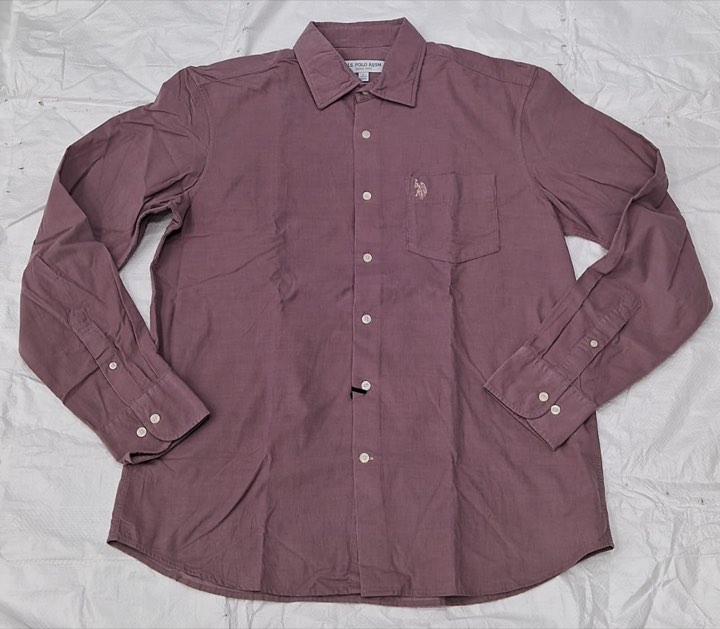
Dusky maroon men's shirt with a point collar, chest pocket with a small embroidered motif and buttoned barrel cuffs, laid flat
Pl. 06 — Dusky maroon, chest pocketFlat-lay
03c · Tailored

Tailored silhouettes

Between the two sits the tailored silhouette: measured at the chest, gently shaped at the waist — sometimes with back darts — but never clinging. It is the cut most men find they were looking for all along, because it looks sharp without asking the body to be anything it is not.

A tailored shirt is the natural partner for men's executive shirts and structured suiting: tidy enough to stay smooth beneath a waistcoat, relaxed enough for a full day in the city. Compare the drawn outline in Fig. 03c with the slim line beside it — the difference is a few centimetres, and it is everything.

Executive formal shirts

§ 03 — The frame of the face

The collartriptych

The collar is the only part of a shirt that is always seen. Its angle decides how much tie shows, how wide the knot should be, and whether the face is lengthened or broadened. Three drawings, three temperaments. For how a collar is built — interlining, stand, stitching — turn to Collar Construction; for why it matters so much, read The Importance of Shirt Collars.

Fig. 04 — Spread collar Front view of a spread collar whose points open wide towards the shoulders at roughly 130 degrees, framing a broad tie knot drawn in dashed burgundy. ≈ 130° WIDE POINTS · SHORT KNOT: HALF-WINDSOR / WINDSOR
Fig. 04 — SpreadPl. 01 ↑
Entry 06

Spread collars

The points open wide towards the shoulders, leaving a generous space for the tie. That space wants a fuller knot — a half-Windsor or Windsor — and the horizontal line it draws adds width to a long or narrow face. Worn open, a firm spread collar still holds its shape, which is why it suits a contemporary office as easily as a wedding. Our frontispiece, Pl. 01, shows a clean cutaway-leaning spread on a mustard shirt.

Angle
Wide — roughly 110° to 150°
Face
Long, narrow or oval
Knot
Half-Windsor, Windsor
Jacket
Wider lapels; double-breasted
Formality
5 / 5
Fig. 05 — Point collar Front view of a point collar with longer points set close together at roughly 55 degrees, framing a slim four-in-hand knot drawn in dashed burgundy. ≈ 55° POINT LENGTH NARROW SPREAD KNOT: FOUR-IN-HAND
Fig. 05 — Point
Grey striped men's formal shirt with a point collar and contrasting dark buttons, laid flat
Pl. 07 — Grey stripe, point collar
Entry 07

Point collars

The oldest and most versatile of the turn-down collars. Longer points set close together draw a narrow V that lengthens the face — the natural choice for round or broad faces — and sits neatly around a slim four-in-hand knot. It is the collar of the everyday office shirt, the interview, the shirt you reach for without thinking.

Angle
Narrow — roughly 50° to 75°
Face
Round, broad or full
Knot
Four-in-hand; slim ties
Jacket
Narrow to medium lapels
Formality
4 / 5
Fig. 06 — Button-down collar Front view of a button-down collar worn open without a tie; each collar point is fastened to the shirt front by a small button, highlighted in burgundy, and the collar shows a soft roll. BUTTONED POINTS SOFT ROLL NO TIE NEEDED ANGLE ≈ 60°
Fig. 06 — Button-down
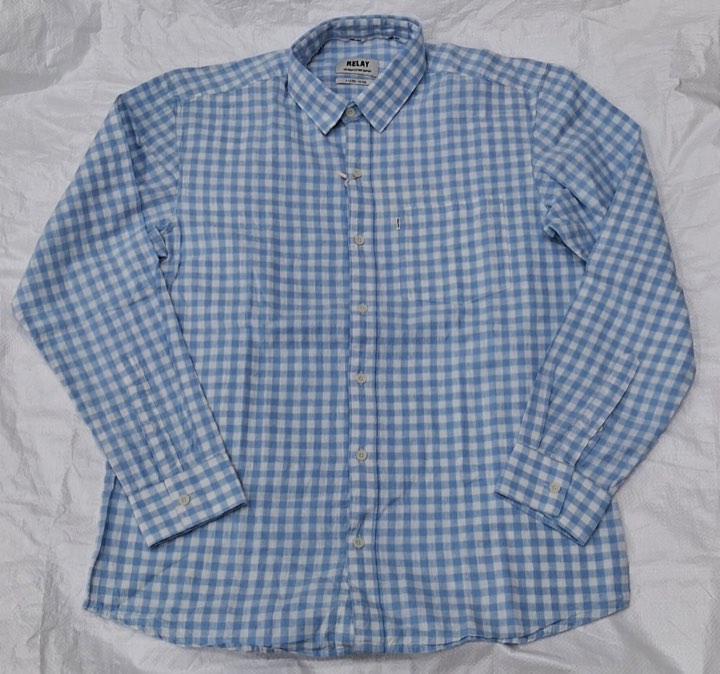
Sky-blue and white gingham check shirt for men with a short point collar and chest pocket, laid flat
Pl. 08 — Sky-blue gingham; button-down drawn in Fig. 06
Entry 08

Button-down collars

Small buttons fasten the collar points to the shirt front, so the collar holds a soft roll whether or not you wear a tie. It is the most relaxed of the three — perfect open-necked under a blazer, with a knitted or textured tie on a Friday, or for travel. Keep it away from a dinner suit and the most formal boardrooms. Gingham like Pl. 08 is its natural habitat.

Angle
Moderate, held by buttons
Face
Most faces; softens angular jaws
Knot
None, or a knit tie
Setting
Smart casual, travel, Fridays
Formality
2 / 5
Table A

Choosing a collar — face, knot, occasion

Read across from your face shape to the knot and the occasion. The camp collar is set below the line for contrast — it sits outside the formal scale altogether.

CollarFlattersTie knotBest occasionAvoid
SpreadLong, narrow, oval facesHalf-Windsor, WindsorBoardroom, weddings, eveningSkinny ties — the gap swallows them
PointRound, broad, full facesFour-in-handDaily office, interviewsVery wide knots that push the points up
Button-downMost facesNone, or knit tieSmart casual, travel, FridaysBlack tie and the most formal suits
Camp (off the scale)Most faces, worn openNeverWeekends, holidays, evenings outThe office and anything with a jacket and tie
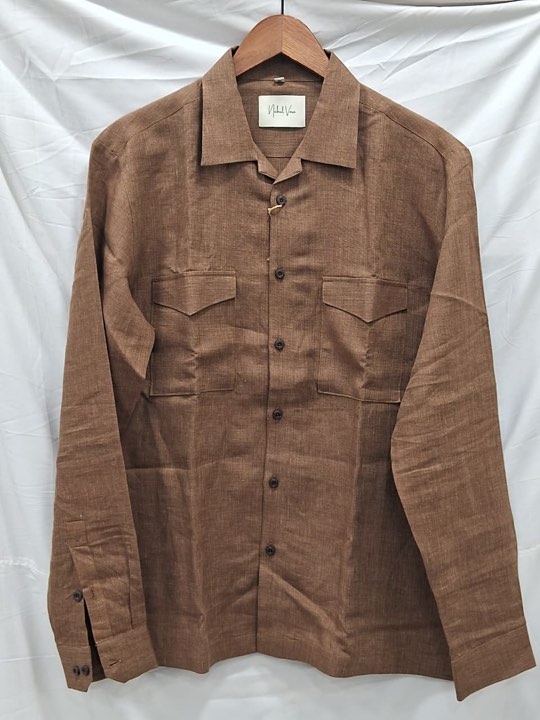
Brown long-sleeve men's shirt with an open camp collar and two flap chest pockets, on a wooden hanger
Pl. 15 — Camp collar, worn open. Outside the formal triptych.Illustrative
§ 04 — At the wrist

Cuffs, and thegrammar of formality

The cuff is the last thing a man adjusts before he leaves the house and the first detail noticed across a desk. Two families do almost all the work: the double French cuff, which asks for cufflinks and a jacket, and the single barrel cuff, which asks for nothing at all. Between them lies the whole scale of formality — read Scale B at the foot of this section.

Fig. 07 — French (double) cuff, worn and as a flat pattern Above: side view of a French cuff, its double layer folded back at the wrist edge, with the two ends pinched together below and fastened by a round cufflink highlighted in burgundy. Below: the cuff unfolded as a flat pattern, with a dashed fold line across the middle and four buttonholes, two at each end. FOLD AT WRIST EDGE CUFFLINK · ENDS KISS TURNED-BACK LAYER FIG. 07b — FLAT PATTERN WRIST CIRCUMFERENCE + EASE 2 × DEPTH FOLD
Fig. 07 — French cuff, worn & flat · buttonholes ×4, no buttons
Deep teal formal shirt with white and grey vertical stripes on a wooden hanger; the cuffs are cut with the stripe running across for contrast
Pl. 09 — Contrast-cut cuffs; French cuff illustrated in Fig. 07
Entry 09

French cuffs

The French, or double, cuff is cut twice as deep as a barrel cuff and folded back on itself. It has no buttons — only four buttonholes — and its two ends meet face to face, "kissing", to be held by a cufflink. The result is a heavier, more sculpted cuff that sits proudly below a jacket sleeve.

It is the most formal cuff a shirt can wear: required with a dinner suit, natural at weddings and ceremonies, assured in the boardroom. Because it adds bulk, French cuffs read best under a jacket, and they want discreet cufflinks — a plain knot, a polished oval — rather than novelty. Pl. 09 shows a related idea in a different key: cuffs cut against the stripe so the wrist reads as a deliberate detail.

Closure
Cufflinks; four buttonholes
Layers
Double, folded at the wrist
Formality
5 / 5
Wear with
Suits, dinner suits; spread or point collar
Not with
Button-down collars; rolled sleeves
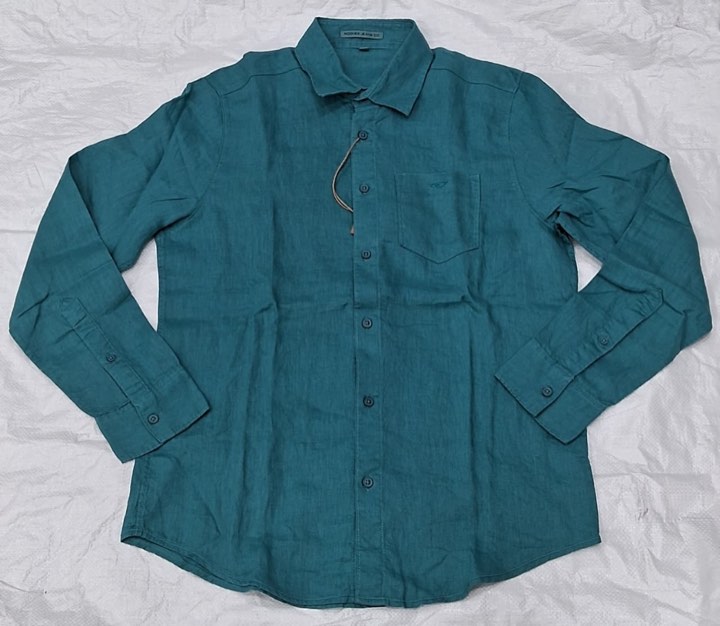
Teal men's shirt with a textured weave, chest pocket and buttoned barrel cuffs, laid flat on a white sheet
Pl. 10 — Teal, buttoned barrel cuffsFlat-lay
Fig. 08 — Barrel cuff, worn and as a flat pattern Above: side view of a single-layer barrel cuff wrapped around the wrist, its overlapping end fastened by a button highlighted in burgundy, with a second, dashed button position for adjusting the fit, and a sleeve placket with its own small button. Below: the flat pattern with one buttonhole at one end and two buttons at the other, plus three corner shapes: square, rounded and mitred. BUTTON THROUGH OVERLAP 2ND BUTTON · ADJUSTS GIRTH SLEEVE PLACKET BUTTON FIG. 08b — FLAT PATTERN SQUARE ROUNDED MITRED
Fig. 08 — Barrel cuff, worn & flatCorner variants ×3
Entry 10

Barrel cuffs

A single band of fabric that wraps the wrist and closes with a button — the cuff on the great majority of men's office shirts. Two buttons set side by side let you adjust the girth so a watch can slip beneath; the corners may be square, rounded or mitred, each a quiet signature of the maker.

The barrel cuff is the honest workhorse: smart under a suit, tidy without one, and the only cuff that should ever be rolled. Choose a mitred or rounded corner for a softer look, a square corner for something more architectural.

Closure
One or two buttons
Layers
Single
Corners
Square, rounded, mitred
Formality
3 / 5
Wear with
Everything from suits to chinos
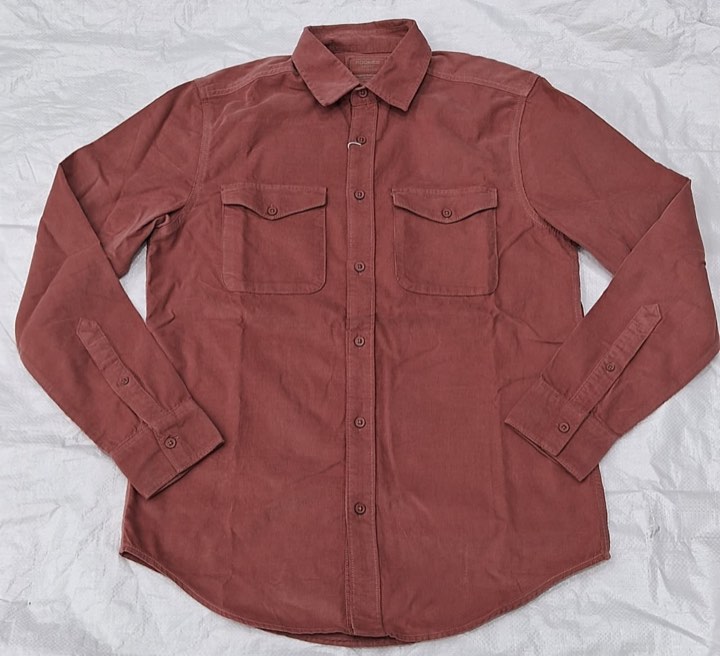
Brick-red long-sleeve men's shirt with two flap chest pockets and buttoned barrel cuffs, laid flat
Pl. 16 — Brick red, buttoned barrel cuffsIllustrative
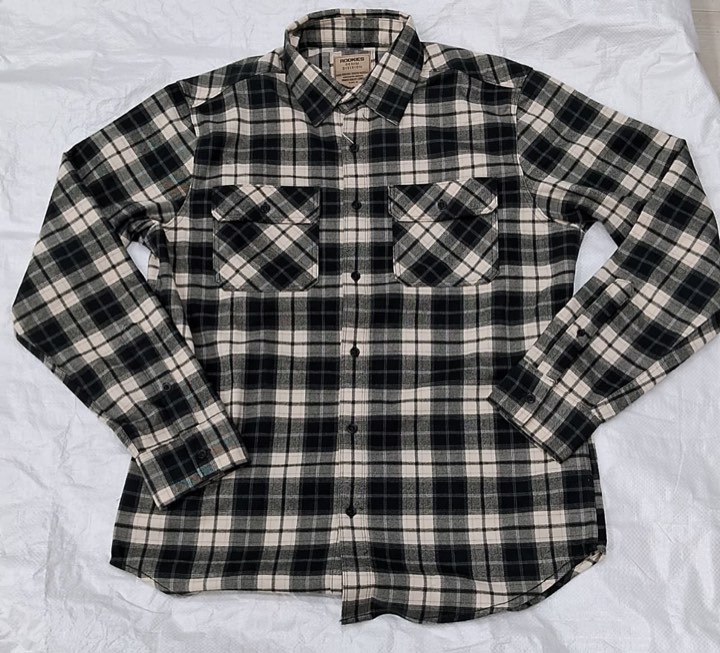
Black, cream and dark green check men's shirt with two flap chest pockets and barrel cuffs, laid flat
Pl. 17 — Black, cream & green checkIllustrative
Scale B The wrist, from relaxed to ceremonial
  1. IHalf sleeveNo cuff; never with a tie
  2. IIBarrel, one buttonThe everyday office
  3. IIIBarrel, two buttonsAdjustable; business
  4. IVConvertibleButtons or cufflinks
  5. VFrench, doubleCufflinks; black tie
§ 05 — Entry 11

Full sleeve,half sleeve

Mumbai asks a question no style manual written for colder cities ever had to answer: in this heat, does the sleeve have to go all the way to the wrist? For formal wear, the answer remains yes — but the half-sleeve shirt has its own honest place, and knowing where that place ends is half of dressing well.

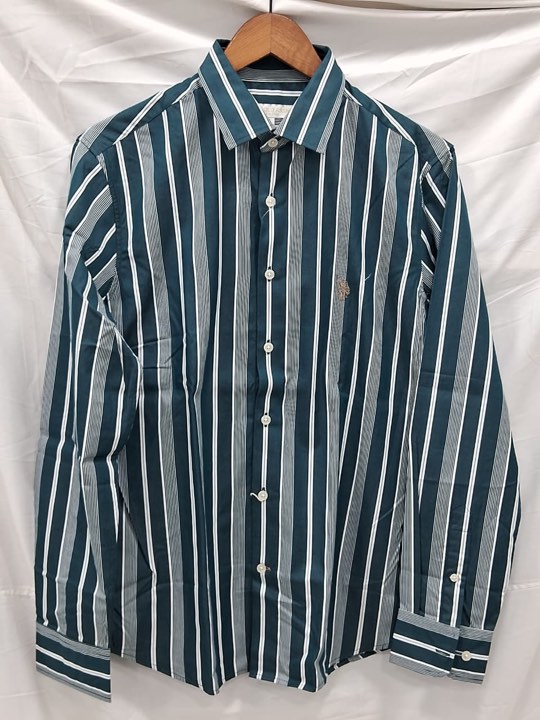
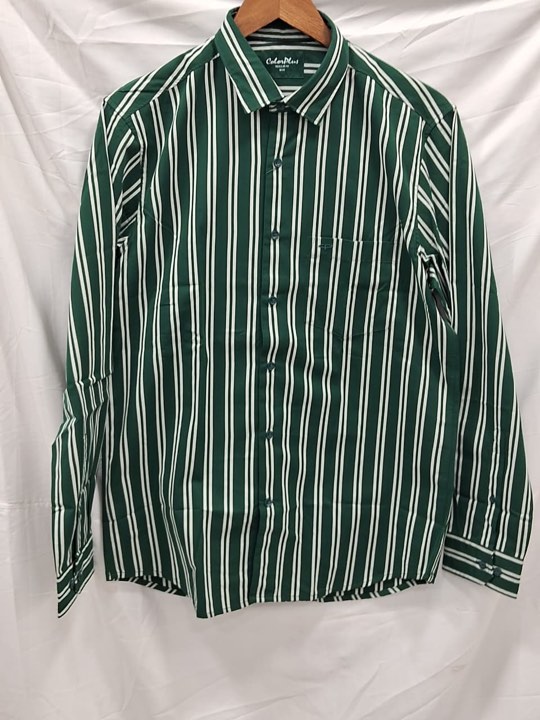
Full-sleeve formal shirt for men in bottle green with white vertical stripes, on a wooden hanger
Pl. 11 — Full sleeve, bottle-green stripeOn hanger
Fig. 09 — Full sleeve and half sleeve compared on one shirt A single shirt drawn split down the centre front: the left half has a full sleeve ending in a barrel cuff at the wrist bone, the right half a short sleeve ending at mid-bicep. Dimension arrows mark each sleeve length. CF FULL SLEEVE HALF SLEEVE SHOULDER → WRIST BONE MID-BICEP CUFF SHOWS ~1 CM BELOW JACKET NEVER WITH A TIE
Fig. 09 — One shirt, two sleevesSplit at centre front
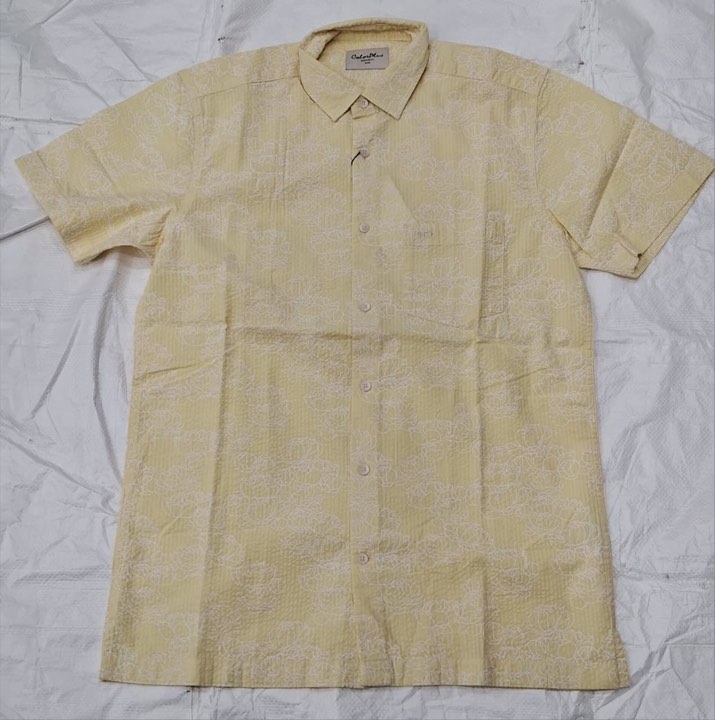
Pale yellow half-sleeve shirt for men with a tonal white floral outline pattern and a point collar, laid flat
Pl. 12 — Half sleeve, pale yellow
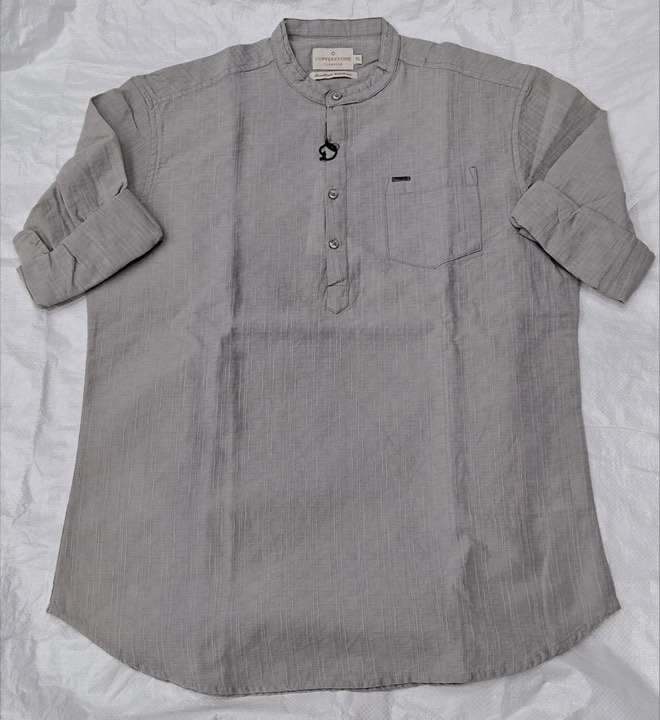
Grey half-sleeve men's shirt with a band (mandarin) collar, half placket and chest pocket, laid flat
Pl. 18 — Grey, band collar, half sleeve
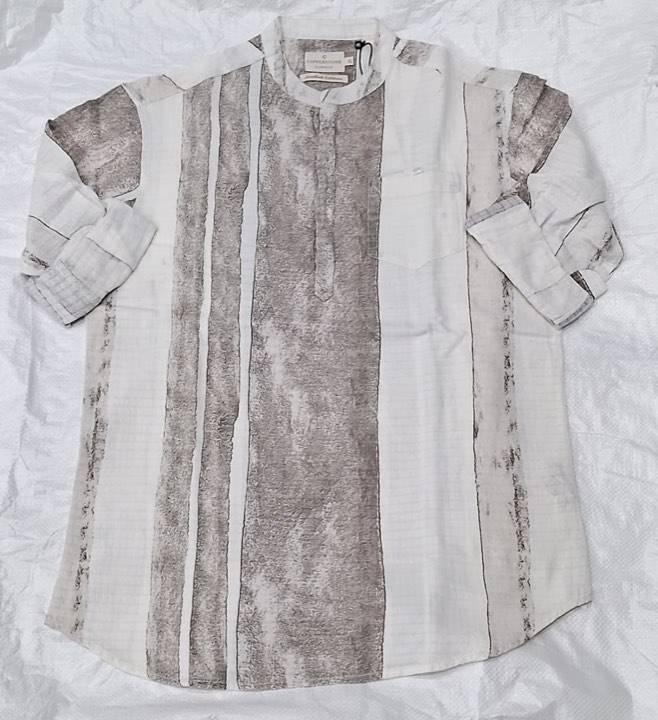
Cream half-sleeve men's shirt with broad taupe-grey textured stripes and a band (mandarin) collar, laid flat
Pl. 19 — Cream & taupe stripe, band collar
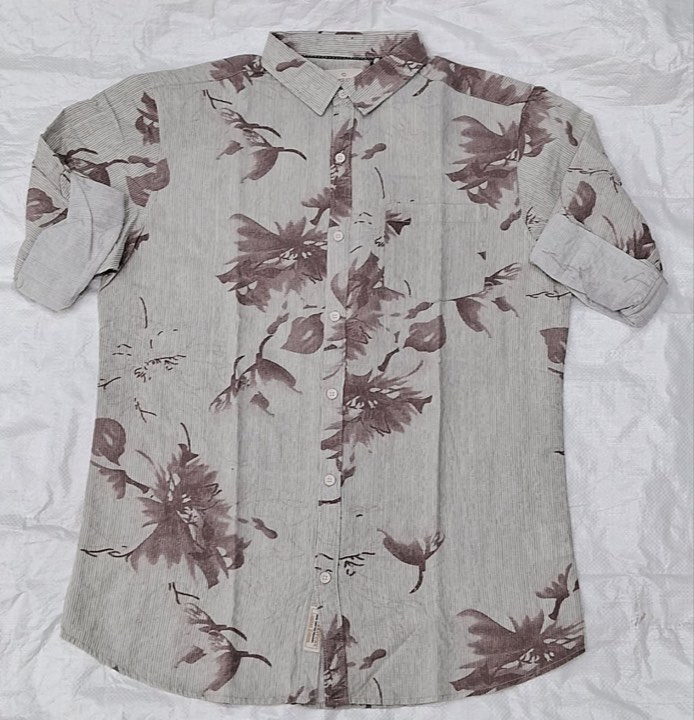
Light grey men's shirt with a large mauve-maroon floral print and sleeves turned up with button tabs, laid flat
Pl. 20 — Sleeves turned up, floral printIllustrative

Note — The band, or mandarin, collar has no fall and no points, so it is never worn with a tie. Paired with a half sleeve it becomes the most relaxed shirt in this journal: right for a warm Mumbai weekend, wrong for a meeting.

Table C — Full against half
AttributeFull sleeveHalf sleeve
FormalityFormal and businessInformal; relaxed office days
With a tieAlways correctNever
With a jacketThe cuff should show just below the sleeveAvoid — it bunches and shows bare wrist
ClimateLight, breathable weaves keep it wearable in Mumbai heatCoolest choice for errands and weekends
Sleeve endsAt the wrist bone, cuff resting on the handMid-bicep, clearing the elbow

The full-sleeve formal shirt is the default for business formal shirts in Mumbai — and on a humid afternoon it can be rolled neatly twice to just below the elbow (barrel cuffs only). Keep half sleeves for the days, and the offices, where nobody is wearing a tie. Lighter weaves help both: see poplin and oxford in Fabrics & Details.

§ 06 — From page to shop floor

Bring the journalto Juhu.

A drawing can tell you what a spread collar is. Only a mirror can tell you whether it is yours. Visit Options Mall on V.M. Road to try collars against your face, cuffs against your watch, and slim, tailored and regular fits against each other — the easiest way to choose men's formal shirts in Juhu with confidence.

Store details
StoreOptions Mall
AddressVile Parle Shopping Centre, Above Sahakari Bhandar, V.M. Road, Juhu, Vile Parle West, Mumbai - 400049
Mobile+91 8369381345
Emailoptionsclothingmumbai@gmail.com
BringYour usual tie, your watch, the jacket you wear most