p. 03

Contents

An edit, in the old sense of the word: we have taken the vast, noisy subject of men's formalwear and kept only what earns its place. Read it front to back like a quarterly, or turn straight to the page you need on a Sunday evening before a big week.

Published by Options Mall · Juhu, Mumbai

Feature 01 · The Officep. 06

The modern corporate wardrobe

The dress code has loosened; the expectations have not. Why the formal shirt is still the hardest-working garment a professional man owns.
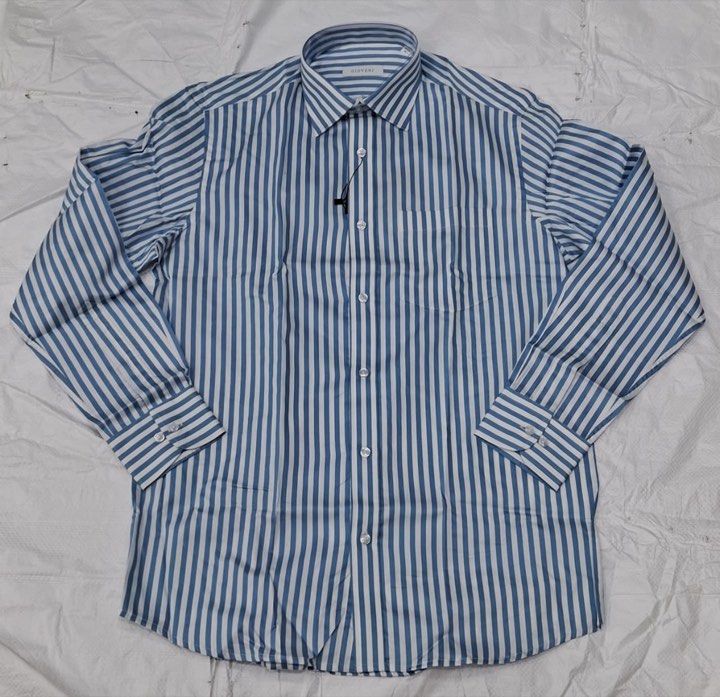
Men's blue and white wide-striped formal shirt with a classic collar, chest pocket and white buttons, laid flat on a white sheet
Pl. 01 — Steel-blue awning stripeIllustrative

Walk through any office tower in Bandra Kurla Complex or Lower Parel on a weekday and you will see the paradox of contemporary corporate dress. Ties have largely vanished, jackets hang on the backs of chairs, and Fridays have drifted towards denim. Yet the formal shirt has not merely survived this loosening — it has become more important, because it now carries the whole weight of an outfit that used to be shared between a suit, a tie and a pocket square.

When the shirt is all there is, everything about it shows. A collar that collapses under the strain of a long day reads as fatigue. A sleeve that swallows the wrist reads as indifference. A pattern that shouts across a conference room becomes the only thing anyone remembers. The modern corporate wardrobe, then, is less about owning more shirts and more about owning the right ones — shirts with a firm collar, a clean line through the body and a colour story that works under fluorescent light and on a video call alike.

Start with structure. A collar with a reasonable spread sits well with or without a tie, and holds its shape when the top button is undone — the way most men in Mumbai actually wear a shirt for nine months of the year. Look at the placket: it should lie flat, and the buttons should be sewn firmly enough not to pucker the cloth. Then consider fit. A slim-fit shirt follows the torso without pulling at the buttons; a regular fit gives more room through the chest and waist, and is often the more elegant choice for broader frames. Neither is "better"; the right one is the one that lies smooth when you sit down.

Finally, pattern. The awning stripe pictured here is a confident corporate choice: bold enough to give a plain navy trouser something to talk to, regular enough to stay professional. Pair a few such stripes with a base of plain whites and blues and you have a wardrobe that looks considered from Monday to Friday without ever looking costumed.

After six When the jacket comes off for a dinner that follows work, a darker printed shirt can take over from the stripe. Keep the trouser plain — charcoal is the safest answer — and let the print do the talking.
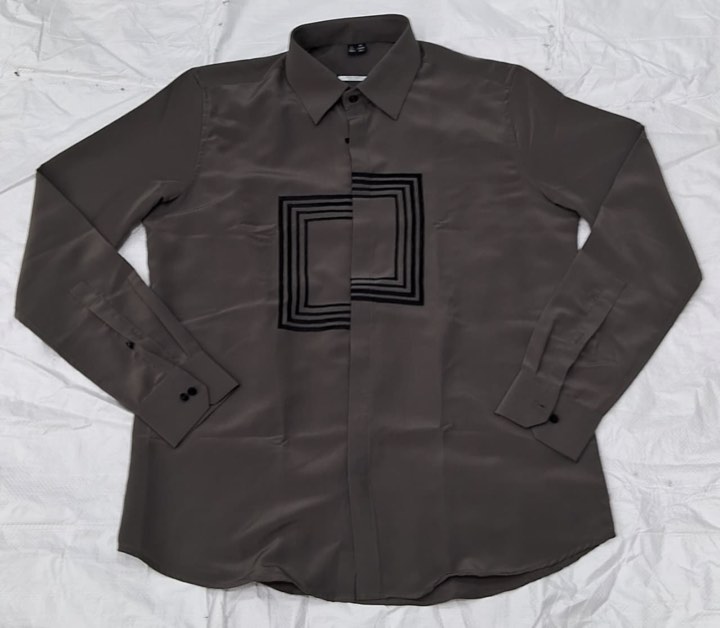
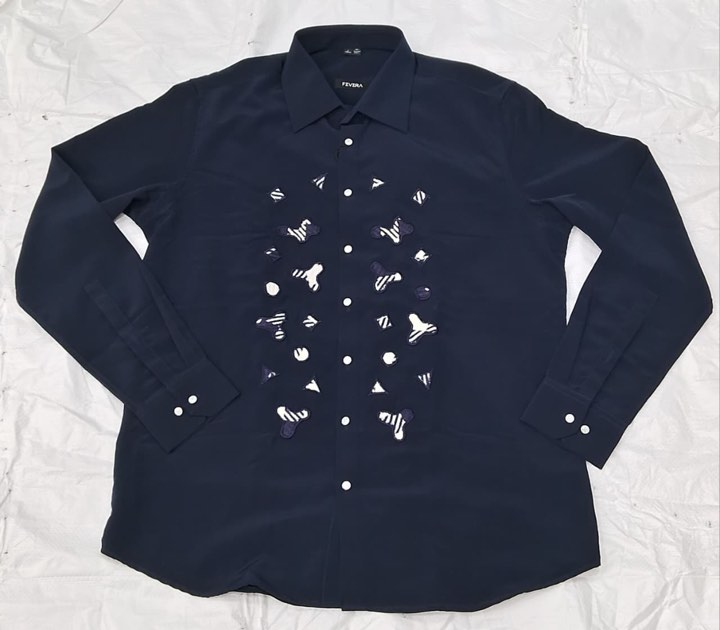
Charcoal grey men's shirt with a concealed placket and a black nested-square motif across the chest, point collar, laid flat
Pl. 10 — Charcoal, nested-square motifIllustrative
Navy men's shirt with a scattered cluster of white and grey geometric motifs down the front, spread collar and white buttons, laid flat
Pl. 11 — Navy, scattered motifIllustrative

Feature 02 · The Meetingp. 14

Formal shirts for business meetings

A meeting is decided in its first ninety seconds, and most of those seconds happen before anyone opens a laptop.

The shirt you choose for a meeting is a form of courtesy. It tells the people across the table that you have prepared — that the deck has been rehearsed and the numbers checked — before you say a word. That is why the classic advice endures: for a first meeting with a client, an investor or a new senior colleague, reach for a plain white or a pale blue. They are neutral, they flatter almost every Indian skin tone, and they keep the attention where it belongs, on your face and your argument.

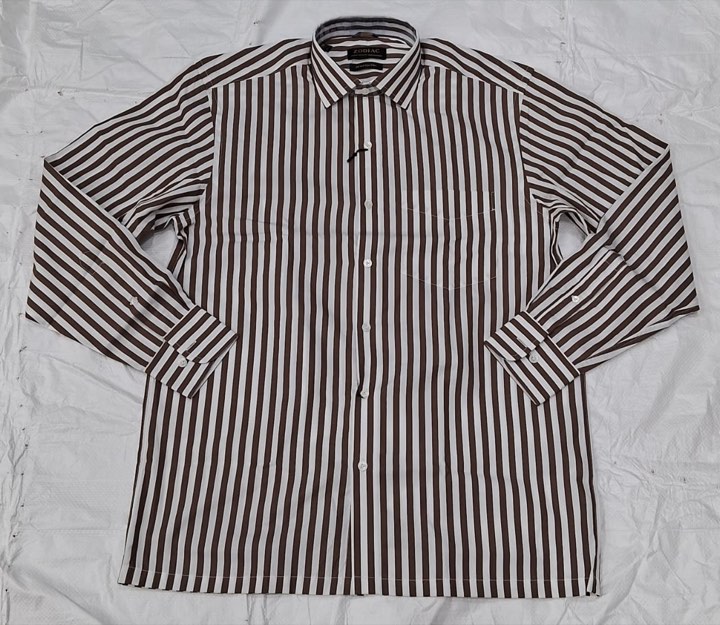
Once a relationship is established, you can afford more personality. A stripe — like the brown-and-white bengal pictured here — signals warmth and a little self-assurance. Brown is an underused colour in business dress; against a white ground it reads softer than navy and pairs beautifully with grey or navy trousers and brown shoes. Keep the stripe regular and the collar sharp, and it remains entirely professional.

Think, too, about the room itself. Mumbai meetings swing between frozen conference rooms and humid site visits, sometimes on the same afternoon. A shirt that wrinkles at the first sign of heat will look tired by four o'clock; a smoother weave holds up better. If you will be presenting, avoid very fine checks and tight stripes, which can shimmer on camera and on projector-lit faces. And if a jacket is likely, check that the shirt collar sits a centimetre or so above the jacket collar at the back — a small detail that makes a big difference to how finished you look.

Our journal goes deeper on how to dress for business meetings, and the striped formal shirts chapter of the collections shows the full spectrum, from barely-there pinstripes to bolder bengals.

Brown and white bengal-striped men's formal shirt with a spread collar, chest pocket and white buttons, laid flat
Pl. 02 — Brown bengal stripeIllustrative

The shirt you choose for a meeting is a form of courtesy.

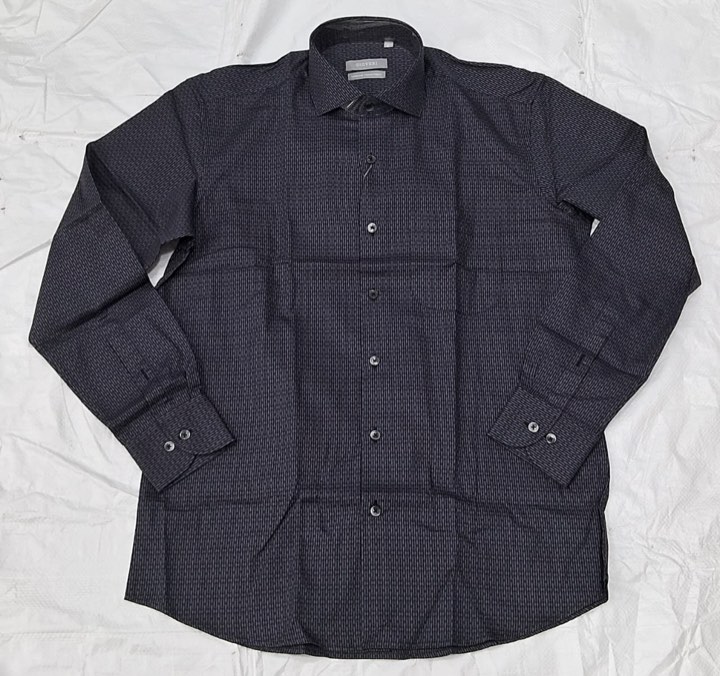
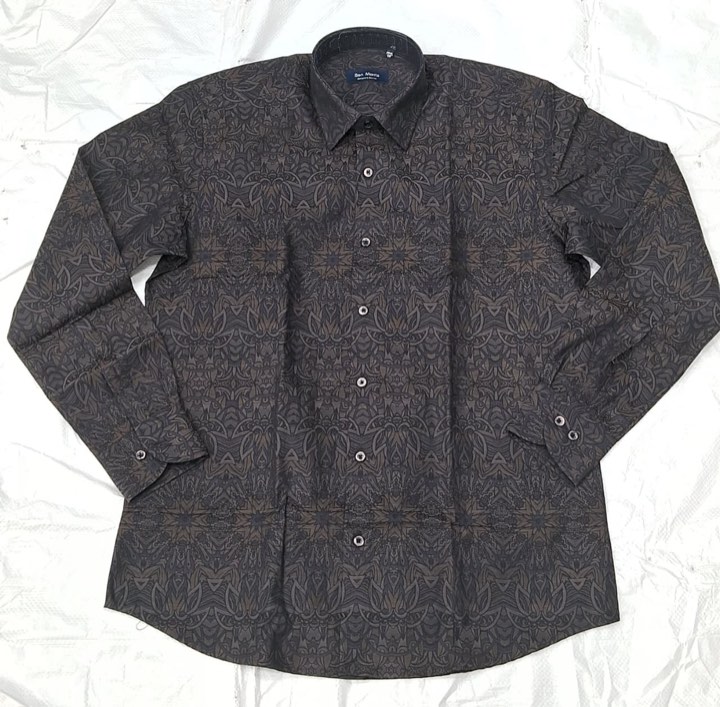
Charcoal-black men's executive shirt with a fine tonal geometric weave pattern, spread collar and dark buttons, laid flat
Pl. 03 — Charcoal, tonal figureHover to inspect the weave

Feature 03 · The Corner Officep. 22

Executive dressing

Seniority rarely announces itself. It whispers — in darker cloth, quieter pattern and a fit that looks as if it was never in question.

There is a moment in most careers when the wardrobe has to change register. The bright shirts that signalled energy in your twenties start to feel like trying too hard; what is wanted now is calm. Executive dressing is the art of that calm. It favours depth over brightness — charcoal, deep navy, midnight — and texture over loud pattern.

The shirt pictured is a good example of the idea. From across a room it reads as a solid dark shirt; up close a small tonal figure appears in the weave, rewarding the person sitting next to you rather than the person across the street. That is precisely how executive dress should work: detail for those near enough to notice, composure for everyone else.

A dark shirt does demand discipline elsewhere. Wear it with mid-grey or charcoal trousers rather than black, so the outfit has a gentle tonal step rather than a single block. Leather should be dark and polished. If you add a jacket, a mid-grey or textured navy keeps the look from tipping into evening wear. And because dark cloth shows lint and fading quickly, it deserves careful laundering — inside out, cool water, line-dried away from direct sun.

For formal days, consider the cuff. A French cuff with simple metal links is the most traditional signal of occasion, while a neat barrel cuff is the working man's equivalent. Under a jacket, a spread collar frames the face with authority. Browse the men's executive shirts chapter for more in this register.

Detail for those near enough to notice. Composure for everyone else.

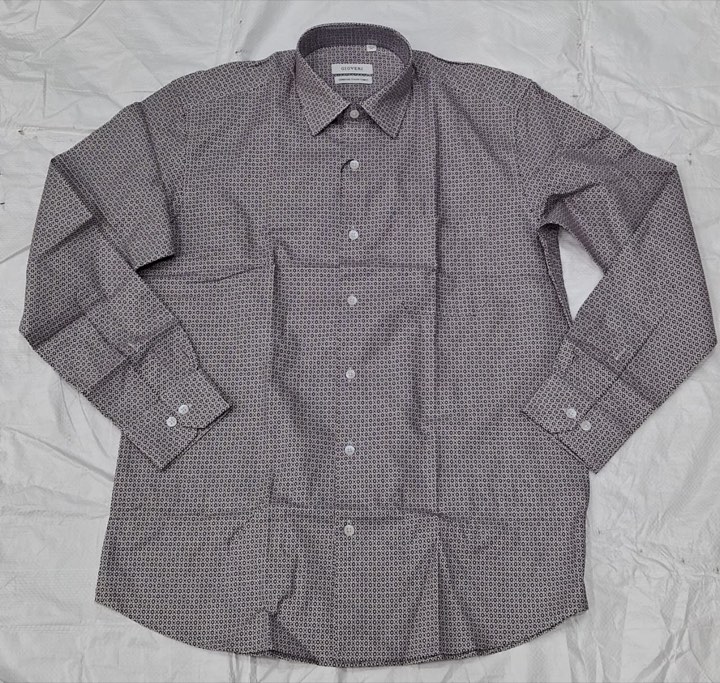
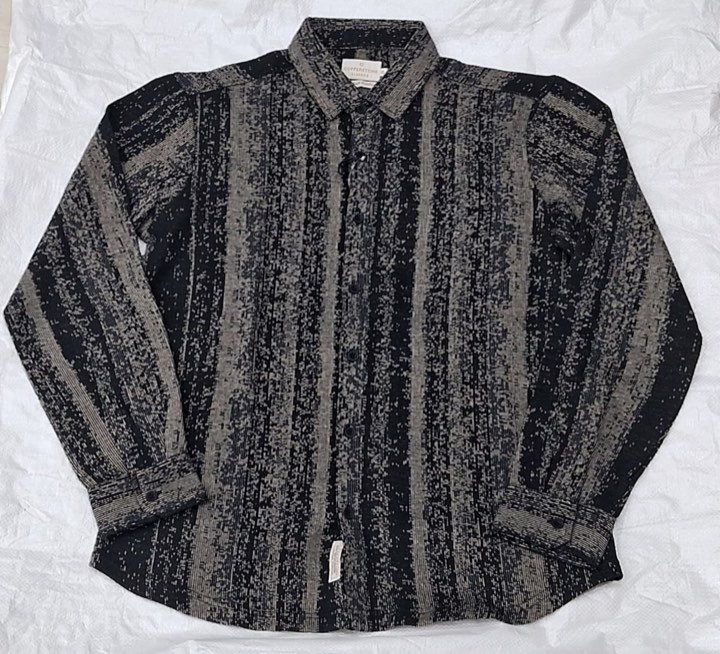
Grey men's office shirt with a small all-over micro print, point collar and white buttons, laid flat on a white sheet
Pl. 04 — Grey micro printIllustrative

The quiet workhorse: a small, regular print in grey reads as a solid at a distance, hides the creases of a long commute and pairs with nearly every trouser in the wardrobe.

For the full range of plain colours, see solid formal shirts; for how cloth affects comfort, read our notes on oxford and twill.

Feature 04 · The Inventoryp. 30

Office wardrobe essentials

An office wardrobe should be built like a good kitchen: a few dependable staples used daily, a few specialist pieces used well. Most men own too many of the wrong shirts and too few of the right ones — a drawer of novelty prints and only two whites that are, if we are honest, slightly grey at the collar.

The inventory below is a starting point for men's office wear in a city like Mumbai, where the week might include a client lunch in Juhu, a long day at a desk and an evening that runs on from the office. Adjust the numbers to how many days you actually go in; the proportions matter more than the totals.

Office wardrobe essentials: shirt, suggested quantity and why it earns its place
N°The shirtQty.Why it earns its place
01Plain white, semi-spread collar×2The default for first meetings, interviews and anything with a jacket. See white formal shirts.
02Pale blue, solid or fine texture×2Softer than white on camera and under office lighting; flatters most complexions.
03Fine blue stripe×1Adds rhythm while staying entirely formal. Pairs with navy, grey and charcoal.
04Small check or micro print×1Hides creases; reads as a solid from a distance. See checked formal shirts.
05A darker solid×1Charcoal or deep navy for late meetings and dinners that follow work.
06A smoother weave for heat×1For monsoon commutes and site visits — look for a cloth that breathes. Our fabrics guide explains the options.

Feature 05 · The Chartp. 38

Formal colour combinations

Most colour mistakes in business dress are not about taste. They are about contrast — too little, too much, or in the wrong place.

The principle is simple: a formal outfit wants one clear step of contrast between shirt and trouser, with the shirt usually the lighter of the two. Light shirt, dark trouser is the classic formula because it frames the face and grounds the body. Reverse it — dark shirt, light trouser — and you can still look sharp, but it takes more confidence and a more precise fit.

Next, temperature. Blues, greys and lavenders are cool; stone, olive and brown are warm. Cool with cool reads composed and corporate; a single warm note against cool (a stone trouser with a pale blue shirt, say) reads relaxed and summery. Two strong warm colours together rarely belong in an office.

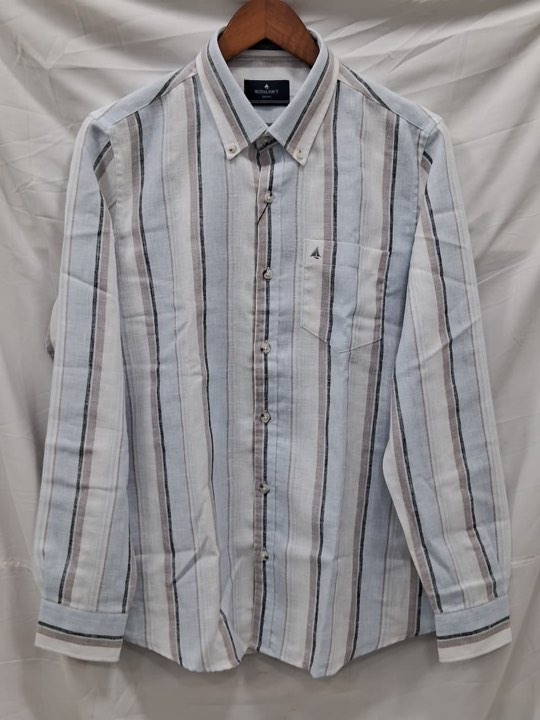
Multi-coloured shirts, like the striped button-down pictured, make coordination easier, not harder: simply pick up one of the stripe's colours in the trouser. Here, navy, grey or stone would all work. The chart that follows rates thirty-six common combinations; read across from the shirt to the trouser. Our journal piece on formal shirt colour combinations develops the theory further.

Men's button-down collar shirt in pale blue, white, taupe and navy vertical multi-stripes with a chest pocket, on a wooden hanger
Pl. 05 — Multi-stripe button-downIllustrative
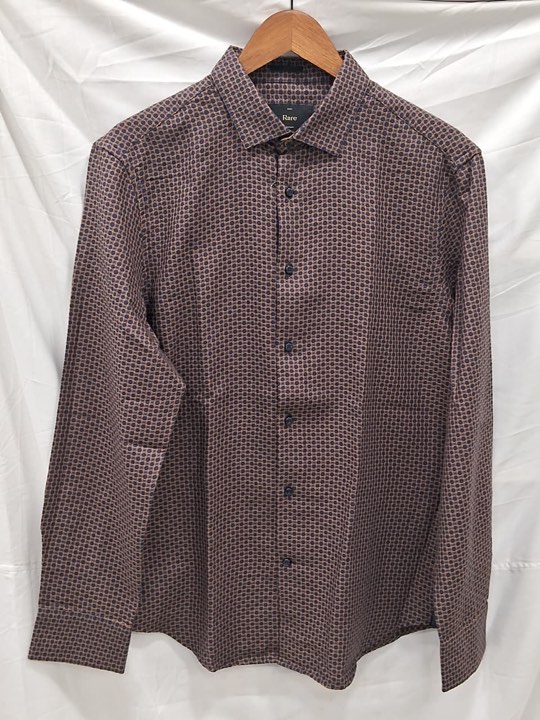
Brown men's shirt with a small burgundy and grey geometric print, point collar and dark buttons, on a wooden hanger
Pl. 12 — Brown, burgundy figureReads as a dark shirt

The colour chart Shirt × Trouser

  • Classic — always correct
  • Confident — works with care
  • Avoid — rarely flattering
Formal colour combinations: each shirt colour (rows) rated against each trouser colour (columns) as classic, confident or avoid.
Shirt ↓ · Trouser → Navy Charcoal Light grey Black Stone Olive
White Classic Classic Classic Confident Confident Confident
Pale blue Classic Classic Classic Avoid Classic Confident
Pale pink Classic Classic Confident Avoid Confident Avoid
Lavender Classic Classic Confident Avoid Confident Avoid
Mid-grey Classic Confident Avoid Confident Confident Avoid
Charcoal / black Avoid Confident Classic Confident Classic Avoid

Note a. Pale blue with black trousers is not wrong, but it tends to look like a uniform; navy or charcoal does the same job more elegantly.

Note b. Dark shirt with navy trouser — two deep colours of similar weight — often looks muddy under office light. Give it a lighter trouser instead.

Note c. "Confident" pairings depend on fit and context: excellent at a smart dinner, braver at a board meeting.

  • a. Point collar, softly spread — sits cleanly open at the neck.
  • b. Fine cream dashed stripe — the "darkest thread" here is the olive ground.
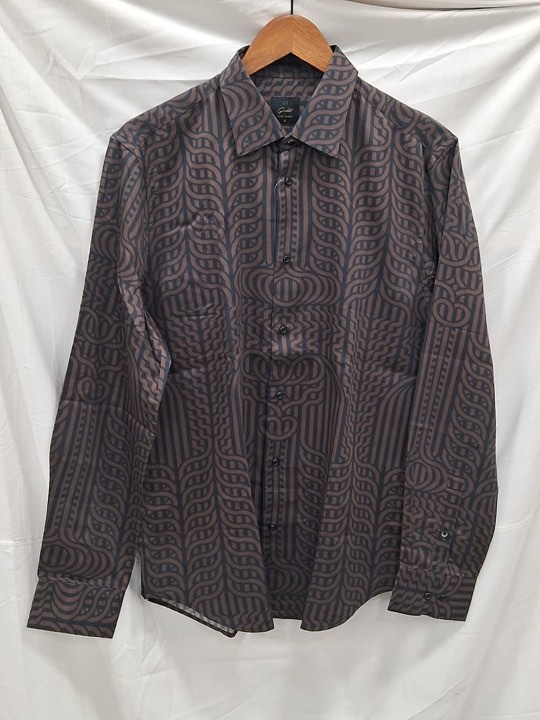
  • Dark brown men's shirt with a tan chain-link vertical print, point collar, on a wooden hanger
    Pl. 13 — Brown, tan chain printIllustrative
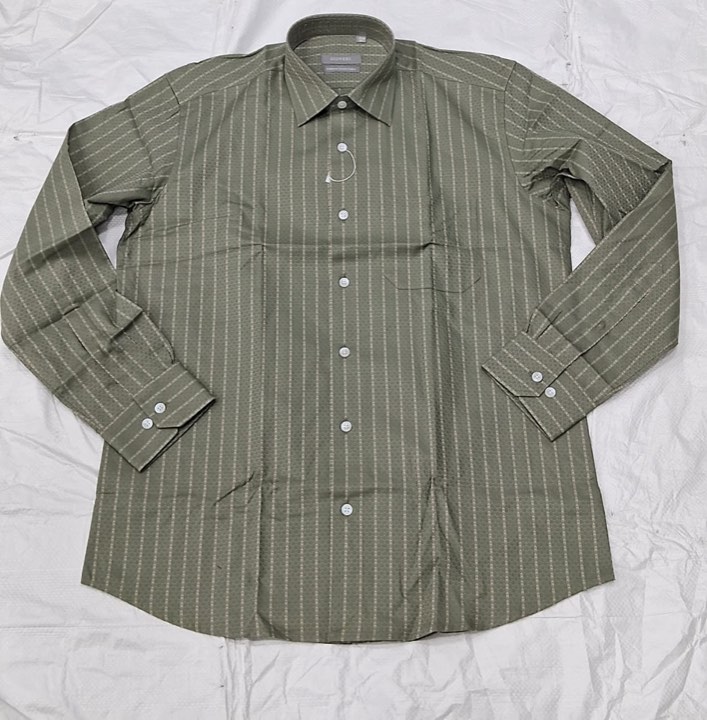
Olive green men's formal shirt with fine cream dashed vertical stripes, point collar and white buttons, laid flat on a white sheet
Pl. 06 — Olive, cream dashed stripeIllustrative
  • c. Pairs with: charcoal, stone, deep brown.
  • d. Shoes & belt: dark brown, matched.
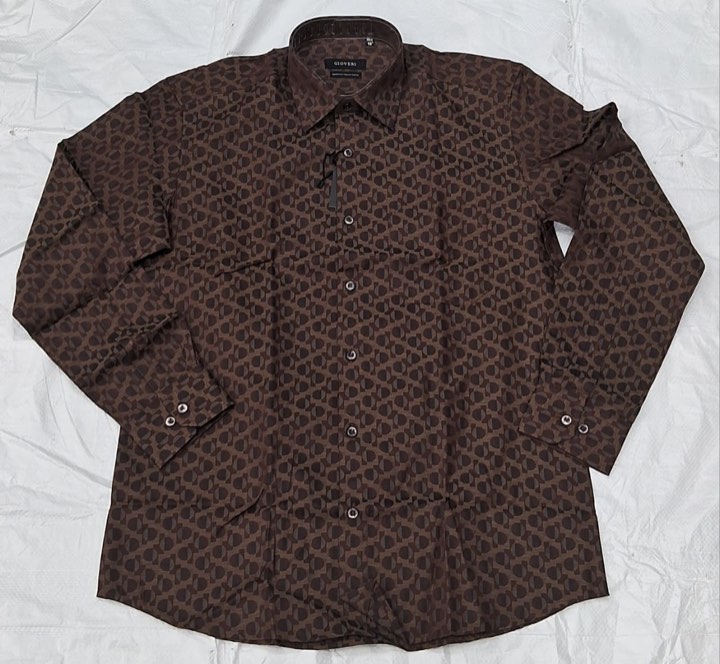
  • Dark brown men's shirt with an all-over tan interlocking geometric print, spread collar and grey buttons, laid flat
    Pl. 14 — Same rule, darker groundIllustrative
  • e. Where the ground is the darkest thread, as on Pl. 13 & 14, answer with stone or a pale grey trouser instead.

Feature 06 · The Pairingp. 48

Shirt & trouser coordination

A colour chart tells you what is permitted; coordination is about what is graceful. The two garments should look as if they were chosen for each other, not merely tolerated in each other's company. The easiest way to achieve that is what tailors sometimes call the rule of the darkest thread: find the deepest colour in your shirt and let the trouser either echo it or sit a clear step darker.

Take the olive shirt in the plate above. Its ground is a muted green, its stripe a pale cream. A charcoal trouser grounds it calmly; a stone trouser picks up the cream and turns it into a warm-weather outfit; a deep brown makes it autumnal and rich. What does not work is a trouser that competes — a bright navy that pulls the eye in a different direction, or another green that is almost, but not quite, the same.

Proportion matters as much as colour. A busy shirt wants a plain trouser; a strongly textured trouser wants a quieter shirt. Fit should be consistent: a slim-fit formal shirt above a wide, pleated trouser looks disjointed, as does a full-cut shirt bunched into a narrow one. The regular-fit formal shirts chapter shows how a fuller body balances a classic straight leg.

Then the tuck. A formal shirt should be tucked firmly and evenly, with the side seams lined up with the trouser seams. A shirt that is too short will escape every time you reach for something; look for a tail long enough to stay put through a full day of sitting, standing and travelling across the city.

Feature 07 · The Detailsp. 56

Professional presentation: presence is the sum of small things

  1. The collar

    It frames your face in every conversation and on every call. It should be clean, flat at the points and close to the neck when buttoned — a finger's width, no more. Collar stays help; a curling point undoes an otherwise immaculate outfit. Our guide to the importance of shirt collars goes further.

  2. The sleeve

    The cuff should meet the wrist bone with the arm relaxed, and show about a centimetre beneath a jacket sleeve. Too long reads borrowed; too short reads outgrown.

  3. The press

    Iron the collar first, then cuffs, sleeves, back and fronts. A crisp yoke and back matter as much as the front — people see them when you walk away.

  4. The shoulder

    The shoulder seam should sit at the edge of your shoulder bone. If it droops down the arm, no amount of pressing will make the shirt look like yours.

  5. The undershirt

    In Mumbai's humidity, a thin, close-fitting vest protects a pale shirt. Choose a V-neck so it vanishes when the top button is open.

  6. The leathers

    Belt and shoes in the same colour and similar finish, both cared for. Scuffed shoes cancel a good shirt.

  7. The pattern scale

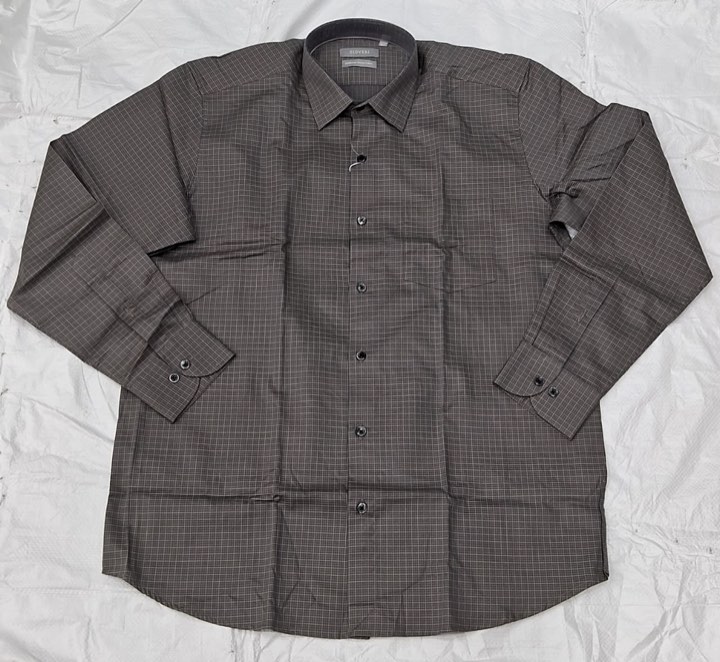
    Small, dense patterns — like the fine grid check in the plate — look calm and orderly. Keep the scale modest for presentations, especially on camera.

Dark charcoal-brown men's formal shirt with a fine light grid check, point collar and dark buttons, laid flat
Pl. 07 — Charcoal grid checkDetail

Professional presentation is not vanity. It is a way of removing distractions, so that what people remember about you is what you said and how you handled the room. None of these seven details costs much; together, they are the difference between a man who is dressed and a man who is dressed well. For a fuller guide to choosing the shirt in the first place, read how to choose the perfect formal shirt and understanding shirt fits.

Charcoal men's shirt with a small tonal brown-grey paisley print, point collar and dark buttons, laid flat
Pl. 15 — Small paisley, read as textureIllustrative

Feature 08 · The Debatep. 62

Traditional versus contemporary formalwear

Traditional formal dress was built on rules handed down through generations of tailors: white or blue shirts, turned-down collars, ties without exception, a jacket in every season. It valued continuity, and its great virtue was that nobody ever had to wonder whether they had got it right.

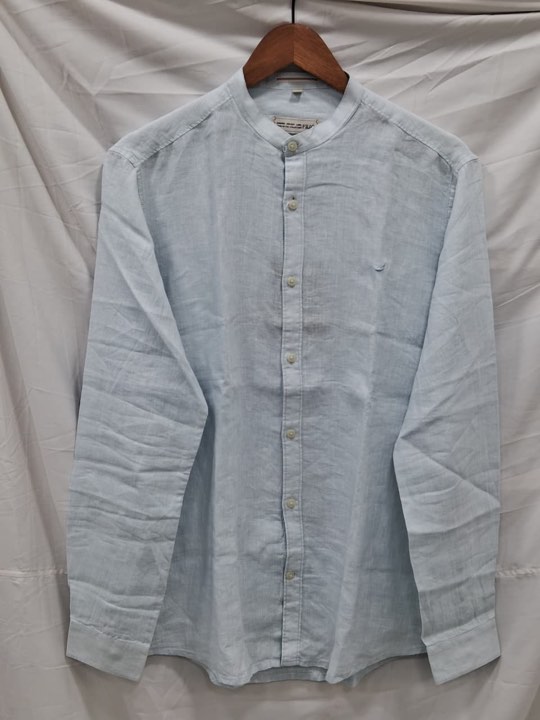
In India, tradition has always had two languages. Alongside the Western shirt there is the band collar of the kurta and the bandhgala, worn for weddings, festivals and occasions of state. The mandarin-collar shirt in our plate is where those languages meet — a formal shirt in construction, Indian in silhouette.

Pale blue men's mandarin-collar (band collar) shirt with a full button placket, on a wooden hanger
Pl. 08 — Pale blue band collarIllustrative

Contemporary formalwear keeps the logic of the old rules while relaxing their letter. The tie is optional; the collar is designed to look good open. Fits are closer to the body, colours range further — sage, lavender, deep olive — and the line between "office" and "evening" has softened. The risk is that without rules, men lose the thread entirely.

The answer is not to choose a side. Wear a band-collar shirt with tailored trousers and polished shoes and it is perfectly at home at a Diwali gathering, a gallery opening or a relaxed Friday at the office. Wear a classic spread collar with a slim, modern fit and you have tradition, updated. Our journal traces the evolution of office fashion, and the contemporary formal shirts chapter shows where it has arrived.

The comparison Six questions, two answers
AspectTraditionalContemporary
CollarTurned-down point or point collar, worn with a tieSpread, button-down or band collar, designed to be worn open
FitGenerous body, room to move under a jacketCloser through chest and waist; tapered but never tight
ColourWhite, pale blue, the occasional creamAdds sage, lavender, olive, charcoal and tonal darks
PatternPinstripes and fine checksMicro prints, bolder stripes, woven texture
CuffFrench cuffs for occasion, barrel for workBarrel by default; sleeves turned back after hours
OccasionOffice and ceremony kept strictly apartOne shirt asked to move from desk to dinner

Feature 09 · The Capsulep. 70

Building a versatile formal wardrobe

Ten shirts, chosen in order, will dress a working man for almost any occasion a year can produce.

Versatility is not the same as blandness. A versatile wardrobe is one in which every shirt works with most of your trousers, most of your jackets and most of the occasions in your diary — so that getting dressed takes a minute and the result still looks chosen. The trick is sequence: buy the foundations first, then add character, then add the pieces that cover the edges of your life.

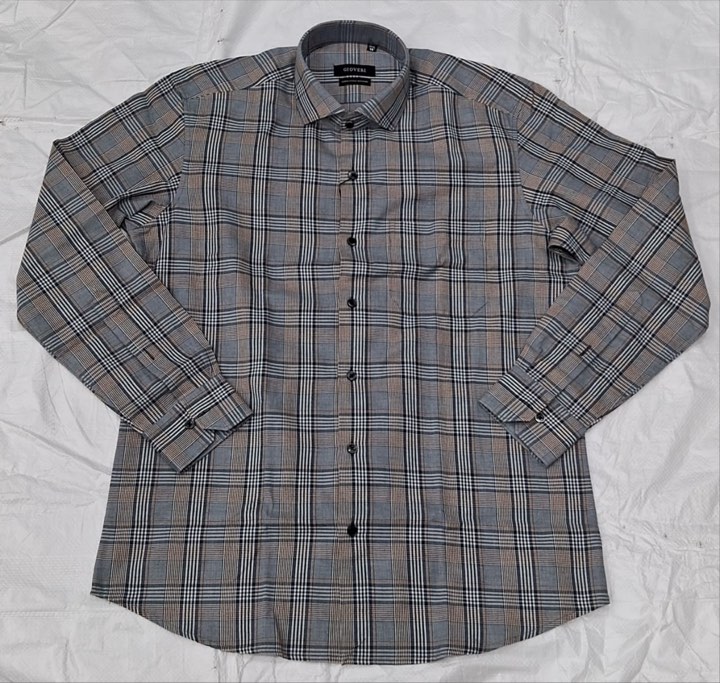
The patterned shirt in the plate is a good example of a later addition. A plaid in grey, black and tan is too casual for a first meeting but perfect for a Friday, a client lunch or a weekend family function, worn with charcoal or stone trousers. Once the foundations are in place, shirts like this multiply your outfits rather than complicate them.

Men's grey, black and tan plaid shirt with a spread collar and dark buttons, laid flat on a white sheet
Pl. 09 — Grey & tan plaidIllustrative
Black men's shirt with a grey vertical brushstroke print, point collar and dark buttons, laid flat
Pl. 17 — Capsule N°10, the character shirtIllustrative

The capsule, in the order to build it

  1. White, spread collar

    The foundation. Interviews, weddings, board meetings, under any jacket.

  2. Pale blue, solid

    The daily workhorse; softer than white, equally correct.

  3. Second white

    So the first is never worn tired. Consider a different collar or weave.

  4. Fine blue stripe

    Movement without noise. Works with every trouser on the chart.

  5. Small check

    For days without a jacket; hides creases on a long commute.

  6. Pale pink or lavender

    A gentle warmth against navy and grey; good on camera.

  7. Charcoal or deep navy

    The evening shirt; from late meeting to dinner without changing.

  8. Button-down in oxford-style cloth

    Smart-casual Fridays and travel. See the button-down collar.

  9. Band collar

    For festive and family occasions; bridges kurta and shirt.

  10. One character shirt

    A bold stripe or plaid — the one people remember, worn sparingly.

Read more in building a versatile formal shirt collection and why white shirts are the foundation, or browse the collections chapter by chapter.

p. 80 · Closing

From the editor

With our compliments,
The Editors, Options Mall

Dear reader,

Everything in this edit can be read on a screen, but very little of it can be decided on one. Whether a collar sits well on your neck, whether a pale blue flatters you more than a white, whether a stripe looks confident or merely loud — these are questions answered in a mirror, with the shirt in your hands and a trouser held up beside it.

So consider this an invitation. Bring the trousers you wear most, or simply a photograph of them, and visit us in Juhu to compare men's formal shirts side by side. Try the colour chart in real cloth. Test a slim fit against a regular one. Take your time; that is what a good shirt deserves.

Options Mall Vile Parle Shopping Centre, Above Sahakari Bhandar, V.M. Road, Juhu, Vile Parle West, Mumbai - 400049.